
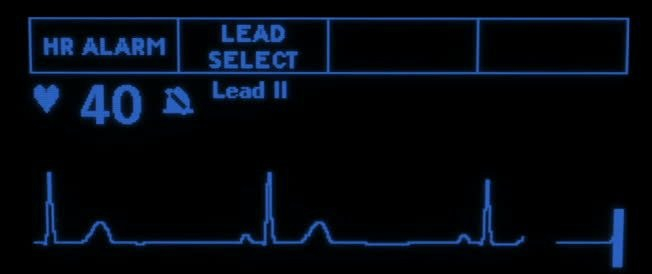
In this episode, we discuss potential bradycardia in traumatic injuries. We touch on main differential diagnoses and their treatment options; primarily focusing on neurological injuries and how we can maximize our effectiveness.
Abraham, M., Brown, J., & Perron, A. (2016, November Vol. 17 Issue 6). Spinal Cord Injury. Trauma Reports, pp. 1-15.
Bhandarkar, P., Munivenkatappa, A., Roy, N., Kumar, V., Samudrala, V. D., Kamble, J., et al. (2017, Jan-Mar Vol.7 Issue1). On-admission blood pressure and pulse rate in trauma patients and their correlation with mortality: Cushing’s phenomenon revisited. International Journal of Critical Illness and Injury Science, pp. 14-17.
Huttemann, E., Schelenz, C., Sakka, S., & Reinhart, K. (2000, April Vol. 26 Issue 4). Atropine test and circulatory arrest in the fossa posterior assessed by transcranial doppler. Intensive Care Medicine, pp. 422-425.
Fong, E. W., MD. (2014). Case Based Pediatrics for Medical Students and Residents (2nd ed.). HI: Department of Pediatrics.
Klabunde, R. E. (2013, May 10). Regulation of Pacemaker Activity. Retrieved from http://www.cvphysiology.com/Arrhythmias/A005
Leanage, N. (2017, June 14). Teach me Anatomy. Retrieved June 23, 2017, from http://teachmeanatomy.info/head/cranial-nerves/vagus-nerve-cn-x/
Shaikh, N., Rhaman, M. A., Raza, A., Shanbana, A., Malstrom, M. F., & Al-Sulaiti, G. (2016, Oct-Dec Vol. 11 Issue 4). Prolonged bradycardia, asystole and outcome of high spinal cord injury patients: Risk factors and management. Asian Journal of Neurosurgery, pp. 427-432.
Sokhal, N., Rath, G. P., Chaturvedi, A., Singh, M., & Dash, H. H. (2017). Comparison of 20% mannitol and 3% hypertonic saline on intracranial pressure and systemic hemodynamics. Journal of Clinical Neuroscience.


